
The Timeless Tale of Batwas & Potlis: India’s Elegant Legacy in Every Stitch
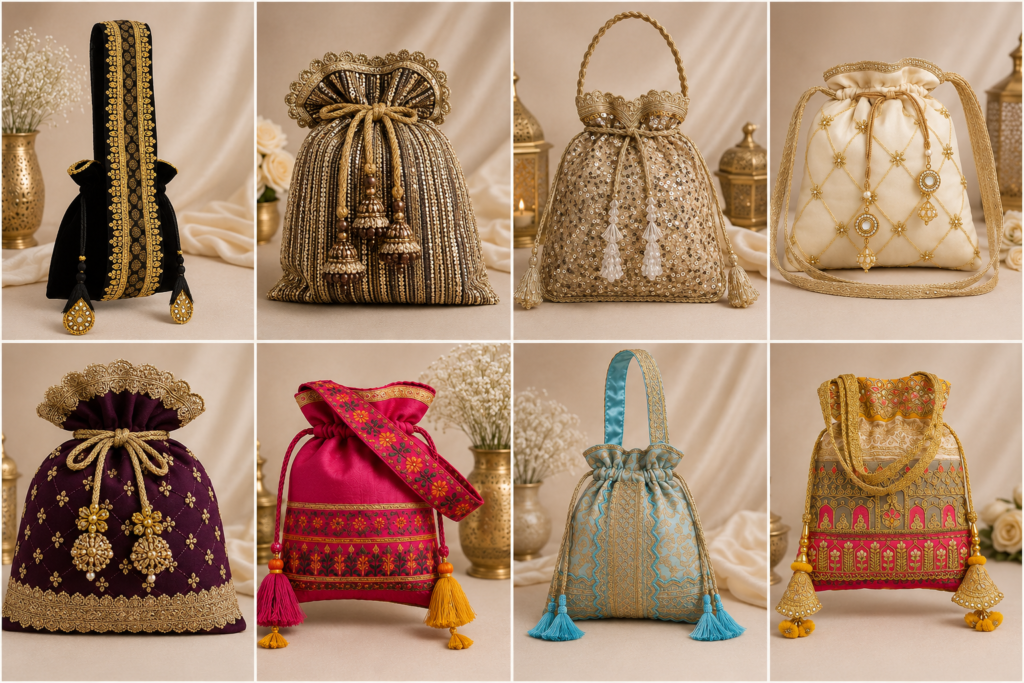
Long before handbags became a fashion statement, India celebrated a more graceful and meaningful accessory—the Batwa and the Potli. These beautifully handcrafted pouches were more than mere carriers of coins or valuables; they symbolized prosperity, artistry, tradition, and personal expression.
Today, these timeless creations continue to captivate fashion lovers around the world. At House of NIA, we honour this rich heritage by reimagining Batwas and Potlis for the modern woman while preserving the craftsmanship that has defined them for centuries.
The Origin of the Potli
The word “Potli” is derived from the Hindi word potli, meaning a small bundle or pouch tied with a string. Long before zippers, wallets, and handbags existed, people used cloth bundles to carry their essentials while travelling or conducting business.
As civilizations evolved, these practical bundles transformed into beautifully stitched drawstring pouches crafted from luxurious fabrics like silk, velvet, brocade, and cotton. Royal families, merchants, and noblewomen embraced them, adorning the pouches with intricate embroidery, zari, pearls, beads, mirrors, and precious stones.
By the time of the Mughal Empire (16th–19th centuries), Potlis had become elegant accessories that reflected wealth, status, and refined taste. Mughal artisans elevated their beauty with intricate floral motifs, gold thread embroidery, and exquisite craftsmanship, many of which continue to inspire Indian design today.
The History of the Batwa
The Batwa has its roots in western India, particularly in Maharashtra, Gujarat, and Rajasthan. Traditionally, a Batwa was a compact pouch designed to safely carry coins, betel nuts (supari), jewellery, keys, sacred items, spices, or fragrant herbs.
Unlike the softer, drawstring-style Potli, Batwas often featured a structured silhouette and decorative flap or gathered opening. They were practical enough for daily use yet elegant enough to complement festive attire.
In many Indian households, beautifully embroidered Batwas were lovingly handcrafted by women as part of their trousseau. Mothers passed these skills from one generation to the next, making each Batwa not only a useful accessory but also a cherished symbol of family tradition and artisanal heritage.
A Symbol of Royal Elegance
Across India’s royal courts, Potlis and Batwas evolved into luxurious works of art. Crafted from rich silks and velvets, they featured:
• Hand embroidery
• Zari and zardozi work
• Gota patti embellishments
• Mirror work
• Pearl and bead detailing
• Precious stones and sequins
• Intricate tassels and handcrafted cords
These exquisite pouches carried perfumes, jewellery, coins, letters, and treasured keepsakes. They became an essential part of royal wardrobes, where every accessory reflected sophistication and impeccable craftsmanship.
Potlis and Batwas in Indian Weddings
Few accessories hold as much sentimental value in Indian weddings as the Potli. For centuries, brides have carried beautifully embellished Potlis to hold jewellery, cosmetics, sacred offerings, and personal keepsakes. Families also use decorative Potlis to present wedding favours, dry fruits, sweets, and gifts to guests.
Similarly, Batwas have played an important role in festive gifting. Filled with turmeric, kumkum, betel nuts, coins, or sweets, they symbolize blessings, abundance, and good fortune.
Even today, these handcrafted pouches remain a cherished part of wedding ceremonies across India.
The Craftsmanship Behind Every Piece
Creating a Batwa or Potli is an art that demands patience, precision, and creativity. Traditional artisans begin by selecting luxurious fabrics such as silk, brocade, velvet, jacquard, or cotton. These are then embellished with techniques including:
• Zardozi
• Aari work
• Gota patti
• Beadwork
• Pearl embellishment
• Sequins
• Tassel making
• Hand quilting
• Fabric appliqué
Every stitch reflects generations of inherited craftsmanship, making each handcrafted piece unique.
From Tradition to Contemporary Fashion
Today, Potlis and Batwas have evolved beyond ceremonial use to become versatile fashion accessories. Modern designers pair them with:
• Sarees
• Lehengas
• Anarkalis
• Indo-western outfits
• Evening gowns
• Cocktail dresses
• Resort wear
• Contemporary festive ensembles
Fashion-conscious women appreciate their compact elegance and handcrafted charm, making them ideal for weddings, festive celebrations, destination events, and elegant soirées.
Sustainability Meets Luxury
In an era of conscious fashion, handcrafted Potlis and Batwas embody the principles of slow luxury.
Unlike mass-produced accessories, they are created in small batches using traditional techniques, premium fabrics, and meticulous attention to detail. Their durability and timeless appeal encourage mindful consumption, preserving both artisanal skills and cultural heritage.
Choosing a handcrafted Potli is not just a style statement—it is an investment in craftsmanship, sustainability, and the livelihoods of skilled artisans.
House of NIA: Preserving a Beautiful Legacy
At House of NIA, every Batwa and Potli tells a story.
Inspired by India’s rich textile traditions, our collections celebrate luxurious silks, elegant velvets, handcrafted embroidery, intricate beadwork, delicate tassels, and timeless artistry. Each creation is thoughtfully designed to honour heritage while complementing the modern woman’s wardrobe.
Whether carried by a bride on her wedding day, gifted during festive celebrations, or styled as an elegant statement accessory, every House of NIA creation reflects our philosophy:
Tradition. Texture. Timeless.
A Legacy That Lives On
The story of the Batwa and Potli is woven into India’s cultural fabric. From the bustling markets of ancient kingdoms to the grandeur of royal palaces and the joy of modern celebrations, these handcrafted treasures have journeyed through centuries without losing their charm.
Their enduring appeal lies not only in their beauty but in the stories they carry—stories of artisans, families, celebrations, and traditions passed lovingly from one generation to the next.
At House of NIA, we are proud to continue this journey, crafting accessories that preserve the elegance of the past while embracing the style of today.
Because true luxury is timeless, and every handcrafted Batwa and Potli carries a legacy worth celebrating.